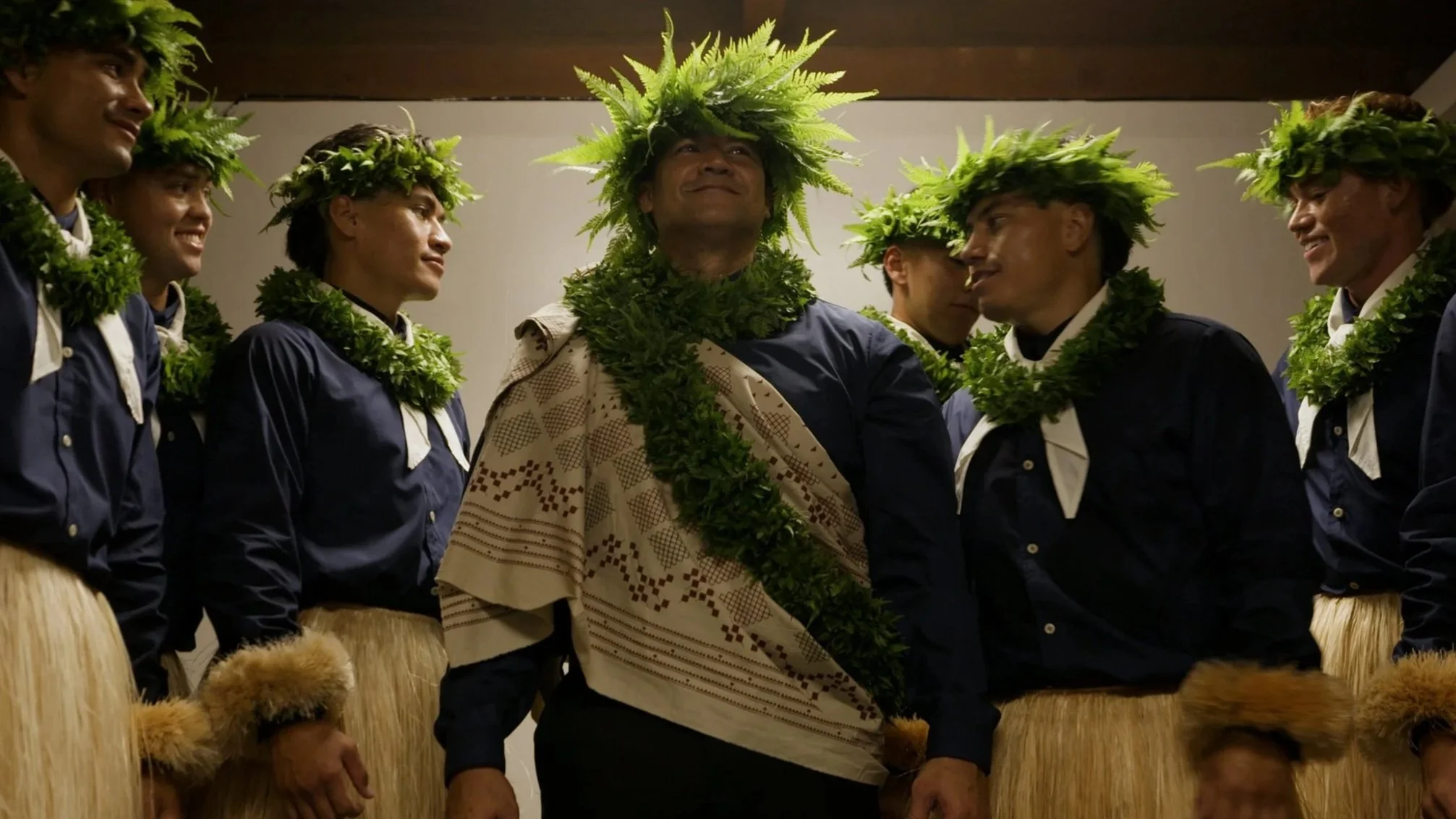
HULA: Becoming Kumu follows legendary kumu hula La'akea Perry and his all-male hālau, Ke Kai O Kahiki, across nine years as they fight to preserve a rare style of male hula and triumph at the Merrie Monarch Festival, the most prestigious hula competition in the world.
Once the greatest male hula dancer of his generation, La'akea now faces a harder challenge: shaping young men from Waiʻanae, one of Hawaiʻi's most underserved communities, into dancers worthy of a sixty-year lineage. Using the discipline and ancestral weight of the dance, he forges boys into men.
Over nine years, we watch them marry, have children, and grieve losses. Hula holds them through all of it, even as Hawaiʻi faces an existential reckoning — with its climate, its economy, and its future.
Filmed through the pandemic, the Lāhainā wildfire, and the floods of 2026, the film unfolds against Hawaiʻi's worsening cost-of-living crisis. To hold his dancers together, La'akea provides them jobs and opens his home to those who have nowhere else to go. Because without that, there is no hula.
It is a story about what it means to inherit something sacred, and what it costs to keep it alive.
HULA: Becoming Kumu
He mastered the dance. Now he has to save it.
About the Film
HULA: Becoming Kumu is a feature documentary currently in post-production. Filmed over nine years through close collaboration with La'akea Perry and the hālau, the film is co-owned by the filmmakers and Ke Kai O Kahiki, ensuring that any proceeds go directly back to the hālau.
That matters because Ke Kai O Kahiki charges nothing for hula. In a tradition where tuition is standard, the hālau has remained free for nearly six decades, open to any young man who walks through the door. The film exists to honor that commitment and help sustain it.
We are currently seeking finishing funds and strategic partners to bring HULA: Becoming Kumu to audiences in Hawaiʻi, across the continent, and around the world.
Support
Your donation helps us complete post-production and bring HULA to the audiences it deserves. Contributions support key finishing needs: editing, sound, color, archival materials, music, legal, festival submissions, and community screenings.
All contributions are tax-deductible charitable donations made through Kikaha Foundation, the nonprofit arm of Ke Kai O Kahiki and the film's fiscal sponsor, which receives 7% of every donation. Every gift helps us honor this story with the care, craft, and cultural respect it deserves.